Bank Account Links to Game Servers Drive Broader Options in Registration-Free Mobile Casinos
Leon Sullivan · Sep 19, 2026
Bank Account Links to Game Servers Drive Broader Options in Registration-Free Mobile Casinos
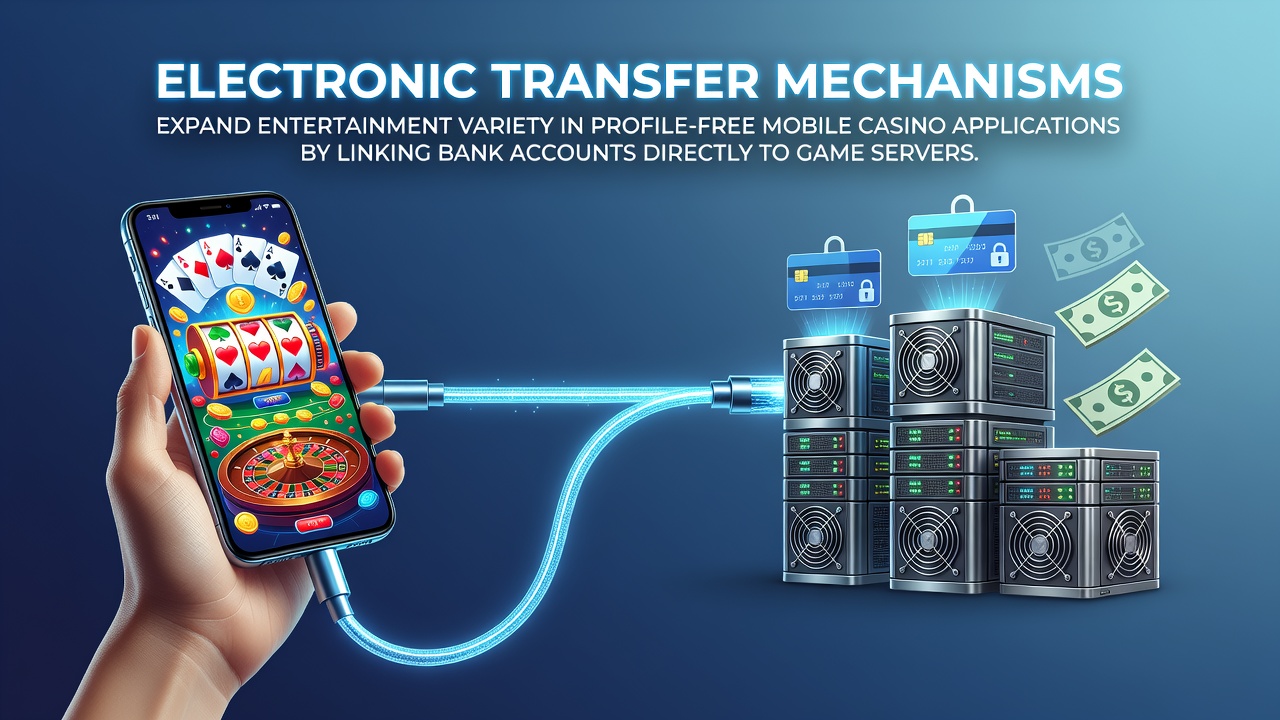
Electronic transfer mechanisms now connect bank accounts straight to game servers in profile-free mobile casino applications, and this direct linkage supports expanded entertainment choices across portable platforms. Operators route funds through secure APIs that bypass traditional registration steps, which lets users access slots, live dealer tables, and hybrid game formats immediately upon verification. Data from industry reports shows that such integrations have grown steadily through 2025 and into September 2026, with transaction volumes rising in several regulated markets.
Mechanics of Direct Bank-to-Server Connections
These systems rely on open banking protocols that transmit payment instructions from a user's financial institution to the casino's backend servers in real time. Authentication occurs via existing bank credentials rather than new account creation, and funds move through encrypted channels that comply with regional financial standards. Researchers at institutions studying digital payments note that this approach reduces latency compared with intermediary processors, while security layers such as tokenization keep account details isolated from the gaming environment.
Once a transfer completes, game servers receive confirmation signals that unlock session access without storing personal profiles on casino databases. This structure allows simultaneous participation in multiple game types, because server-side balance updates occur instantly across different categories like reel-based sequences and dealer-hosted events. Observers in payment technology circles point out that the architecture also supports automated compliance checks during each transaction, which aligns with oversight requirements from bodies such as the Malta Gaming Authority.
Expansion of Game Variety Through Streamlined Funding
Direct linkages have coincided with wider availability of game formats on mobile devices that operate without mandatory signups. Players gain entry to live dealer environments, automated table games, and progressive jackpot slots in a single flow, because funding no longer depends on separate wallet setups or profile verification loops. Figures from European Gaming and Betting Association publications indicate that markets adopting these transfers saw measurable increases in the number of active game titles per platform between 2024 and 2026.
Take one operator network that integrated bank APIs in early 2025; that network added hybrid crash-style games and multi-player table variants within months, since server resources could allocate to new content without managing user databases. The same pattern appears in North American jurisdictions where state-level regulators permit such linkages, and reports from the Nevada Gaming Control Board document similar expansions in mobile offerings during the same period.
Technical and Regulatory Context in 2026
By September 2026, several mobile platforms had shifted toward server-direct funding models, driven by improvements in API standardization and stronger encryption standards. These changes allow game providers to push updates to titles ranging from classic reels to interactive dealer sessions without delays tied to account management overhead. Academic papers from payment systems research groups highlight that transaction success rates exceed 98 percent in optimized implementations, which supports continuous play sessions across varied formats.
Regulatory frameworks in multiple regions now address data minimization practices inherent in profile-free setups. Compliance teams verify that transfers meet anti-money-laundering thresholds through bank-level monitoring rather than casino-side profiling, and this division of responsibilities has facilitated approvals in additional markets. Industry data indicates that platforms using these methods report higher retention across different game categories because users encounter fewer interruptions when switching between options.
Impact on User Access Patterns
Access patterns reveal that mobile users engage with broader selections once bank linkages replace registration steps. Session logs from integrated platforms show increased time spent across live dealer rooms and slot libraries in the same visit, since balance adjustments happen without manual top-ups. Those who study digital gambling behaviors note that friction reduction correlates with exploration of new game types that might otherwise remain untested.
One documented case involved a European operator that introduced server-direct transfers in late 2025; within six months the platform expanded its catalog by 40 percent while maintaining compliance records through banking partners. Similar outcomes appear in Australian markets where research centers track adoption rates and report parallel growth in available wagering formats on handheld devices.
Conclusion
Electronic transfer mechanisms that link bank accounts directly to game servers continue to shape entertainment variety in profile-free mobile casino applications. The approach streamlines funding while supporting wider game catalogs, and evidence from regulatory reports and industry analyses confirms ongoing adoption through September 2026. Platforms that implement these connections demonstrate expanded options across slots, live dealer experiences, and hybrid formats without requiring user profiles on their systems.